SEO and your writing website

One of our users recently wrote in with a question about SEO, which basically boiled down to this: How does Google find my website? Moreover, how does Google find my website if the website is created by a third party (like Writer’s Residence) and I don’t have control over the website’s metadata?

SEO is something that every writer should think about (though few writers do) because it’s an important step in optimising your website for marketing purposes. The bottom line is: You want people to find you. Search engines are how people find things. Thus, you want people to find you when they search for (1) your name or (2) keywords associated with the things you write about.

Below I’ve explained (1) how we address this issue, and (2) what writers can do themselves to improve their SEO. I’ve also included links to relevant sections of SEOMoz’s The Beginner’s Guide to SEO, a really useful primer that’s miraculously not boring as sin.

What we do in the back-end

Here’s what we do to help search engines find our users’ webpages:

  • We use ‘title’ tags (the stuff you see in the title bar of your web browser) based on the name you supply on your account
  • We use ‘h1′ tags to describe the main heading of your web page, again based on your name, and one of the first things Google looks at when deciding on a website’s page rank in search results.
  • When you create your website, we “tell” Google you exist so that it indexes your web page from the get-go and makes you immediately findable in search results.

What writers can do to improve their SEO

The most important thing for searchability is CONTENT, and this is something you [should] have complete control over, no matter who creates your website. To that end, there’s loads you can do, but here are a few ways to get started that are most important and easiest to implement:

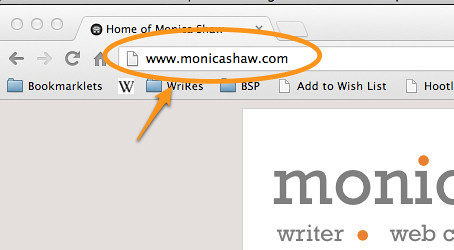
  • Invest in your own domain name, and pick a domain name that relates to the keyword you want people to find you on (usually your own name, e.g. monicashaw.com).
  • Decide which keywords are most important to your business and use them throughout the content of your website.
  • Link to external and internal pages within your content.
  • Use social media (Facebook, Twitter, Google+, etc) to create external links to your content
  • Use Google Analytics to track your stats; adjust and adapt your keywords as you learn how and why people find your website. (And yes, Writer’s Residence does have a facility for integrating Google analytics from the Settings page)

Finally, you might find this SEO checklist handy: The Social Media Marketer’s SEO Checklist.

How to use your writing portfolio to apply to different types of writing jobs

I just had an email from one of our users with a very good question:

Do you have any advice or blog posts about using a writing portfolio to apply to multiple types of writing jobs?
How should my portfolio reflect this, especially when it comes to the Writing Samples and Home sections?

I know this has been a burning question for me for the last four years since I went freelance, and speaks to a challenge that many of us face, especially when we’re just starting out in the trade.

Almost every pro in the business will tell you that writers should have a “niche”. It’s good advice, but even so, niche writers still write for numerous types of media. For me, my niche is food. Sure, I write food articles for magazines and blogs, but I also do lots of writing work WITH food brands, like copywriting, web development and various other forms of consulting. How can I use one writing portfolio to reflect my vast array of experience, and then use that to apply for specific types of writing jobs?

In the past few years I’ve sent my writing portfolio to a LOT of prospective clients and editors. Some of them even gave me jobs. And enough of them gave me jobs that I actually make a living at it. So here are my top tips to our user – and any writer out there applying to different types of writing jobs – based on my experience. I’d love to hear other people’s ideas on the topic, too, so feel free to add your advice in the comments!

It actually begins with your cover letter.

Whenever you apply for a job, or pitch an editor or new client, you always start with a cover letter, even if it’s just an email expressing interest. This is where you can call out your specific experiences that make you right for the gig, and also where you can point editors to specific parts of your online writing portfolio that contains information relevant to the job. My approach is to write a paragraph or two explaining myself and why I’m writing, then call out some specific samples of which I’m particularly proud. Here’s a typical closing paragraph from a cover letter which I sent to the editor of a food magazine, with a sign-off that has a link to my full writing portfolio in the signature:

I’m a freelance writer with many years experience writing about food and travel, with credits including food magazine, the Daily Telegraph. You can find a collection of recent writings on food and travel in my writing portfolio, including my latest piece from Chef Magazine, at the links below:

http://www.monicashaw.com/samples/categories/food-and-travel
http://www.monicashaw.com/samples/restaurant-websites-2-0

Warmest regards,

Monica
monicashaw.com

Use your home page.

Although you’ll be pointing people in your cover letter to specific parts of your portfolio, you still want to make sure you represent yourself well on the main landing page of your website (having done a bit of hiring myself, I always look at an applicant’s website to see how they present themself overall).  Use the homepage place to summarise your range of experience. Don’t get too verbose – this is meant to be a summary. Freelance writer Carol Tice has done a good job of this on her website. You can see how I’ve tackled this on my own website at monicashaw.com.

Categorize your writing samples.

If you’re pitching an article idea on running for beginners to the editor of Women’s Health magazine, then it probably doesn’t make sense to send them a sample of your scholarly Master’s Thesis on liver glutathione homestasis (or the like). Use categories with your writing samples so that you can link specifically to the samples that are relevant. For example, I occasional write e-learning material for brands wanting to train their staff online, so I have a category for e-learning with related samples that I can use in any cover letters that I send for e-learning jobs.

Bonus feel-good tip:

This is a fast-paced world. People get that. And no one is going to raise an eyebrow if you take on different types of jobs. In fact, it’s expected. And it’s a good thing. It means you’re adaptable. Nothing’s wrong with diversifying your experience – it’s good business. Lots of people understand that, and those are the sort of people you want to work with, anyway! So don’t worry if your writing portfolio conveys a wide variety of experiences. Just make sure you point people to the right place in your portfolio when applying for jobs.

How to Make Your Website Theme Rock

themesOne of our missions with Writer’s Residence is to provide writers with a website that looks good by default, so you can spend less time “designing” and more time writing. As such, we offer 16 pre-designed website themes (including a few recent additions from the fantastic designers at Wired Canvas), all of which are designed specifically with writers in mind.

But we also give writers the option to create a custom theme, with their own header and color scheme. To that end, I wanted to offer some advice for writers who want to use a custom theme to help them make it look as good as possible. Of course, these rules not only apply to Writer’s Residence, but to anyone who’s got a website that they’ve designed themselves.

Choosing a header image

This is the image that appears at the top of your page. In Writer’s Residence, you can use any size image you’d like (we resize it automatically to make it look good on the page) but a good rule of them is to use a header image that’s a long, wide rectangle. A header that’s too tall will push everything below it off the screen, but all that stuff below the header is important, and you want people to see it when they first access the page.

Good header:

headergood-1

Bad header:

headerbad-3

How to pick your website’s colour scheme

Writer's Residence Custom ThemeIf you’ve ever gone to a website that’s difficult to read because of the text and background colous, then you know how important colors are to a website. Why should anyone – particularly those all-important editors, clients and customers – stick around if they can’t read it?

In Writer’s Residence, you can customize your theme’s header, text, link, background and text background colours. A good general rule is that dark text on a light background is best. But you can also do even better by picking a colors that work well together and which suit your style and personality.

Here are a few of my favourite tools for picking color schemes:

  • Kuler – a community driven web app that lets your browse color palettes created by others. You can also create your own by using the color wheel, harmony rules, and color sliders.
  • Color Scheme Designer – a nice, simple interface that helps you create beautiful color schemes in seconds.
  • Pictaculous – upload an image and this app creates a color scheme based on that image. This could be particularly handy for those of you using custom header images.
  • COLOURlovers – this one’s a bit of fun and another community driven site where people create and share colors, palettes and patterns.

Color Scheme Designer

In the coming weeks we’ll put together some of our favourite website color schemes and palettes for you to use on your own website. In the meantime, has anyone else got some great tools or ideas to share for creating a rockin’ website theme? We’d love to hear about them in the comments!

In praise of custom domain names

Custom Domain Name

The road to establishing yourself as a professional writer may seem long and ominous but one quick and easy thing you can do to speed things along is to get your own domain name. Why? Well, compare the following URLs:

  • http://monicashaw.blogspot.com
  • http://monicashaw.wordpress.com
  • http://monicashaw.com

Of those three, to which would you attach the most cred?

It’s all about professionalism, and professionals have their own custom domain name. It’s really that simple.

How do I choose a domain name registrar?

You need to register your domain name through a “domain name registrar”. But who to choose? There are probably thousands of places out there where you can register a domain name, all of which vary in terms of cost and customer support (the latter being quite important if you’re not very technically-minded).

I have had positive experience with both Gandi and Namecheap, who both happen to be included in Lifehacker’s list of Five Best Domain Registrars. If you can recommend others, we’d love to hear about the comments.

How do I choose a domain name?

Your name is a good place start (i.e. monicashaw.com). Go for something short, snappy and easy to spell, with no hyphens. Try to get a “.com” domain name if possible. If you’re name isn’t available, or you want to highlight your niche, pick a name that’s on topic (e.g. copyblogger.com, foodwriter.com).

How do I use my domain name on my website?

It all depends on how and where you host your website.

Writer’s Residence customers can setup their custom domain by logging into their account and clicking on “Settings”, then “Website addresses” and following the instructions on the page.

Folks using other web services should be able to find instructions with the service’s support documentation.

Do you have your own domain yet?

We’d love to hear your thoughts and experiences on setting up your own domain. How did you choose a domain name? Who did you register with? Any particular challenges that I haven’t mentioned here?

Writing Samples: What if I haven’t been published?

One of the biggest challenges in starting out as a freelance writer is getting your first article published. But to get published, you need show editors what you can do. How do you do that when you’ve never been published before?

I faced this problem when I first went freelance in April 2008 (feels like yesterday). I’d been working as a banker for over a year and held previous jobs in software testing, research and teaching. I decided to quit my job and give this writing-for-a-living malarky a go but was left with a dilemma: to get published, I’d need to demonstrate to editors that I can write. But how would I do that without samples of published work? The ultimate writer’s Catch-22!

My solution was to think a bit more broadly about “published work”. I ended up taking samples from teaching material, flyers and a few of my better blog posts and turning them into “writing samples” for my online writing portfolio. With the help of my portfolio (and a good pitch) I was able to land my first commission, an article on endorphins for The Daily Telegraph. After that, my arsenal of “published” writing samples only grew.

Just because you don’t have any published clips or writing samples doesn’t mean disaster – we all have to start somewhere. Here are a few tips for dealing with clips in the early stages of your career.

Think again

If you want to be a freelance writer, chances are you’ve already done some writing. Consider these possible sources for your writing clips:

  • Business reports
  • Technical manuals
  • Copywriting
  • Blog posts
  • Sales letters
  • Press releases
  • Newsletters

Write sample articles

Write a couple of articles in the genre you’d like to write for and be your own editor. Make sure these articles represent your best work and give them the same amount of attention you would to a paid article. Who knows, you might be able to sell them someday.

Publish online

Start a blog or offer to write guest posts on other people’s blogs. This is a great way to build up your portfolio and gain exposure to your work at the same time.

Go for small publications

Many small publications and local newspapers are more willing to take a chance on an unknown writer. You can also try pitching shorter pieces to magazines as fillers.

Query without clips

Don’t let a lack of clips keep you from pitching ideas. Simply write a great query and don’t mention clips at all. Instead, talk up other aspects of your experience that makes you right for the job. As always, play up your strengths and omit the weaknesses. Most importantly, keep writing!

Things you shouldn’t do

  • Write on spec. Some may disagree, but I think life is too short to work for free, so unless you’re writing about something you’d write about anyway because you just can’t help yourself, don’t spend the time until you’re sure you’re going to get paid. Professional writers get paid for their craft, and there’s monetary value in what you do.
  • Don’t acknowledge your lack of writing samples. All professional freelance writers have writing samples – that’s what you are, right?

In fact, that last point is the most important point of all: if you want people to take you seriously as a writer, YOU need to take yourself seriously as a writer. That means creating a presence that tells the world “hi, I’m a professional”. You don’t need a huge collection of published work to do this. You simply need a little creativity and confidence.

Position yourself as a professional writer in your pitches, online profiles and especially on your website, not only through your writing samples, but in the words you use to describe yourself on your home page and about page. Soon enough, you’ll have more writing samples than you can keep up with.

8 new themes and a fresh look!

8 New Writer's Residence Themes

Rob and Alice, the lovely folk at Wired Canvas—a multi-disciplinary, full service design agency in London—have done a smashing job over the past couple of months producing 8 wonderful new themes for our writers to choose from.

To check them out click the “Theme” tab after you log in to Writer’s Residence.

We think these new themes will show off your writing beautifully.

Wired Canvas refreshed our website at the same time and we’re delighted.

When publications won’t pay what’s due

Money-Euro-USD-LEI_53073-480x360

In my three years of freelancing, I’m lucky that I’ve had very little experience with publications that don’t pay. However, I was recently owed £250 by a magazine that published my article then didn’t pay within 30 days of my invoice.

After a couple months of chasing (through email and telephone) I got serious and sent them a “statutory demand”, a formal written request to the debtor for the payment. The publication paid up within a day.

For folks in the UK, a statutory demand is a REALLY handy thing to know about, and you can read all about them and get a template for one at direct.gov.uk:

Use a statutory demand to recover a debt

Another handy guide is from the National Union of Journalists London Branch:

Late payment – How freelances can chase up late payers

I only just found the NUJ’s resource while writing this post and I wish I had it sooner – apparently I was entitled to £40 compensation on each late invoice. (Good incentive for invoicing publishers separately for each piece of work.) Well, it’s probably too late now, but good to know for next time, though let’s hope this doesn’t happen for a very very long time.

Image credit: free-stock

My Writing Day

Linda Jones of Freelancewritingtips.com wrote an entertaining and fascinating post this week called “My writing day”, which basically does what it says on the tin: it describes a day in the life of a freelance writer, editor and mom.

I love posts like these that dive into the nitty gritty of one specific person’s experience. It just goes to show how everyone’s is different. While Linda is dealing with her 12-year-old twins and responding to pitches, others have different responsibilities.

So here’s my writing day, written based on today. Of course, this changes every day, but such is the life of a freelancer – always changing, never predictable, but always free.

My writing day

Home office

I wake up at 5:15am because I’m a morning person. As soon as I’m awake I think of all the things I have to do. This is both exciting and annoying.

I get out of bed, turn on the kettle and prop my laptop on the kitchen counter. There I stand for the next hour drinking a cup of tea and finishing whatever it was I started the night before. Today it was a short blog post on composting. I do my best writing in the morning.

After my tea I’m feeling a little more energetic, so head to the gym to lift some weights. I’m tired today. Sore. Could have used more sleep. But I push on, and feel good for having done something (one is better than zero).

Then I come home and have a smoothie and a cup of decaf coffee. By now it’s 8:15am and the dog is giving me that “is it time to go for a walk yet?” look, so I give in and take him for a half hour romp in the fields.

Home again. The need to start working is nagging at me. But toast with almond butter and tea sound nice. So I get that all set up, and as the clouds descent on what was a sunny day, I decide this is a good day to work from bed.

It’s just past 9am. Right. In my mind I list three things I’ve been meaning to do – follow up with an editor on an unpaid invoice, email one of my clients with some edits to some marketing material, and write a proposal for another client for a bit of social media writing I want to do. I tell myself “get it done in an hour”. And I push.

I make the 1-hour deadline, and it’s on to the next thing: a blog post due Wednesday for another client. This one requires some research. I both love and hate research. It’s fun searching Google and reading about things, but it always feels like fake work for me. Nevermind, I can charge for it. Life is good.

Research is exhausting, even when done in bed. So I stretch my legs with another dog walk, and decide it’s time for lunch. Or rather, brunch. It’s only 11:30am, but I’m famished. Over the weekend I made some salsa and sauteed a bunch of onion, potato and green pepper. This made brunch a simple matter of heating up the potato mixture, adding egg and salsa, and viola: a mexican scrambled egg concoction that really hit the spot. Quick but nutritious lunches are essential for the busy freelancer – I often get the nutritious part right, but not so much the “quick” part. Such is the joy of working from home – ultimate freedom to make involved lunches of fresh baked breads, complicated soups and endless salads with homemade vinaigrettes. But then – whoops! – the day is gone, and nothing got done.

I did not fall into that trap today.

Back to work (and back to bed). There’s an instant message from a client. He’s got two requests: one for a bit of copywriting for his website, the other a blog post. I say “I’ll have this done by 3pm” because I like to set myself deadlines. This keeps me busy for a couple of hours. Then I have a call with another client whose blog I write for to discuss content for the week. It’s getting late in the afternoon, and my creativity starts to wane. Time for another dog walk.

Back at home I’m not in the mood for much writing, so I do some networking instead. I check in on Twitter where I am once again overwhelmed by the numerous online presences I’ve created for myself and promise to make time to consolidate it all at some point. But not right now, because we’re approaching the dinner hour. Time to relax with some Radio 6 and a vegetable-chopping session.

I feed the dog and feed myself then clean up and turn on the kettle. It’s the home stretch and I like to use my evenings to work on fun projects like photography or SmarterFitter. Today, it’s Writer’s Residence. So I wrote this. But I probably won’t publish it until the morning, so I can give it once last look with fresh eyes. Then again, I’m feeling sassy tonight – maybe I’ll just go for it.

Unfortunately, getting up at 5:15am means I’m pretty wiped by about 8:30pm… which was 13 minutes ago. So I make myself a cup of tea, and then tell Jay dog that “it’s time for sleep”. Dog gets a floor cuddle before the end of the day, so I sit on the floor with him and tell him he’s a good boy until he gets over excited and I say “fine, be that way.” Then I get into bed with my tea and a book – Margaret Atwood’s “Blind Assassin” at the moment. But I usually only get through a few pages before I pass out like a lump.

Graphic: The Writing Process

Ed Yong of Discover Magazine recently published this brilliant graphical representation of the process of writing a feature. Can you relate? I know I can, with a particularly long stop at the “it seems I’ve forgotten how to write” stage.

Source: discovermagazine.com

Top Tips for Writers from Famous Authors

I just discovered, thanks to Melody Godfred’s delightful Write in Color blog, an equally delightful series in The Guardian called Rules for Writers. The series features famous authors like Jonathon Franzen, Margaret Atwood, and Zadie Smith, who offer their shirt, pithy tips on writing.

Their advice reflect a certain practicality and sense of humour that must only come after “making it” in the big time. Some of my favourites:

Margaret Atwood:

You most likely need a thesaurus, a rudimentary grammar book, and a grip on reality. This latter means: there’s no free lunch. Writing is work. It’s also gambling. You don’t get a pension plan. Other people can help you a bit, but ­essentially you’re on your own. ­Nobody is making you do this: you chose it, so don’t whine.

Will Self:

You know that sickening feeling of inadequacy and over-exposure you feel when you look upon your own empurpled prose? Relax into the awareness that this ghastly sensation will never, ever leave you, no matter how successful and publicly lauded you become. It is intrinsic to the real business of writing and should be cherished.

Elmore Leonard:

Never use a verb other than “said” to carry dialogue. The line of dialogue belongs to the character; the verb is the writer sticking his nose in. But “said” is far less intrusive than “grumbled”, “gasped”, “cautioned”, “lied”. I once noticed Mary McCarthy ending a line of dialogue with “she asseverated” and had to stop reading and go to the dictionary.

Roddy Doyle

Do, occasionally, give in to temptation. Wash the kitchen floor, hang out the washing. It’s research.

Read more: Rules for Writers [The Guardian]